
Procedure comparison · Tijuana and Cancún
Compare the weight loss and revision procedures Renew Bariatrics offers side by side: how each one works, how much weight people lose in studies at 1, 2 and 5 years, the risks, pros and cons, and the price. Our surgeons will recommend one based on your BMI, health history and goals.
Prices are all-inclusive except airfare. HSA and FSA accepted.
Interactive tools
Estimate your weight loss with each procedure, see which ones to ask about, or compare any two side by side. Nothing you enter is saved or sent.
Hover over or tap an amount to see the studies behind it.
These estimates are the averages we see across published studies. Your weight loss will be different. Renew Bariatrics makes no guarantees or warranties about results.
Faded procedures are outside Renew’s BMI range for that option. Revision estimates use your weight at the time of the revision. This isn’t a medical assessment, and our surgeons make the final recommendation.
Have you had weight loss surgery before?
Are you open to surgery?
Do you have acid reflux (GERD)?
Do you have type 2 diabetes?
Detailed comparison
How each procedure works, who it suits, how much weight people lose in studies, the risks, and the pros and cons. Weight loss is the share of total body weight lost, measured from the weight just before that procedure.
Scroll sideways to see every procedure.
| Compare | 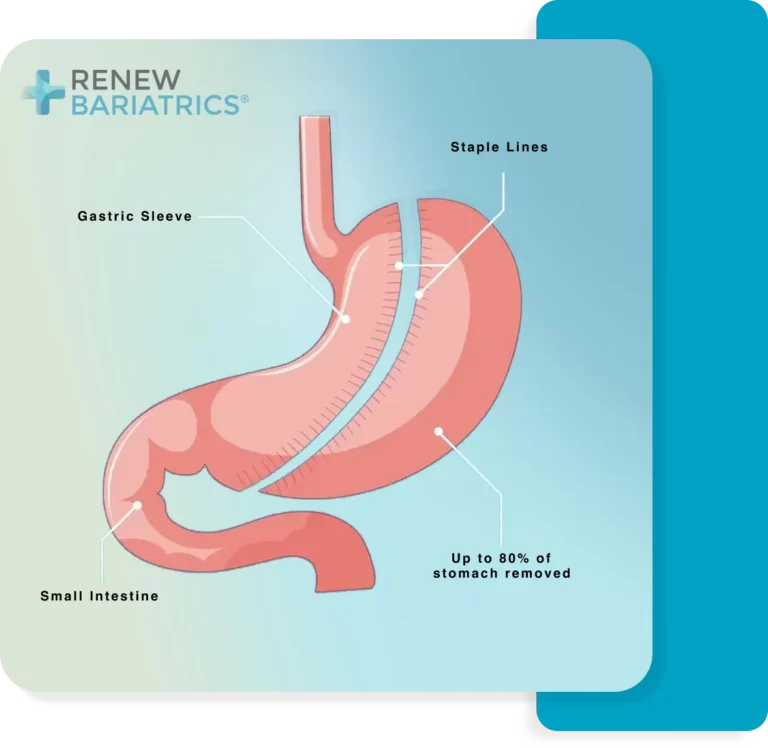 Gastric sleeve | 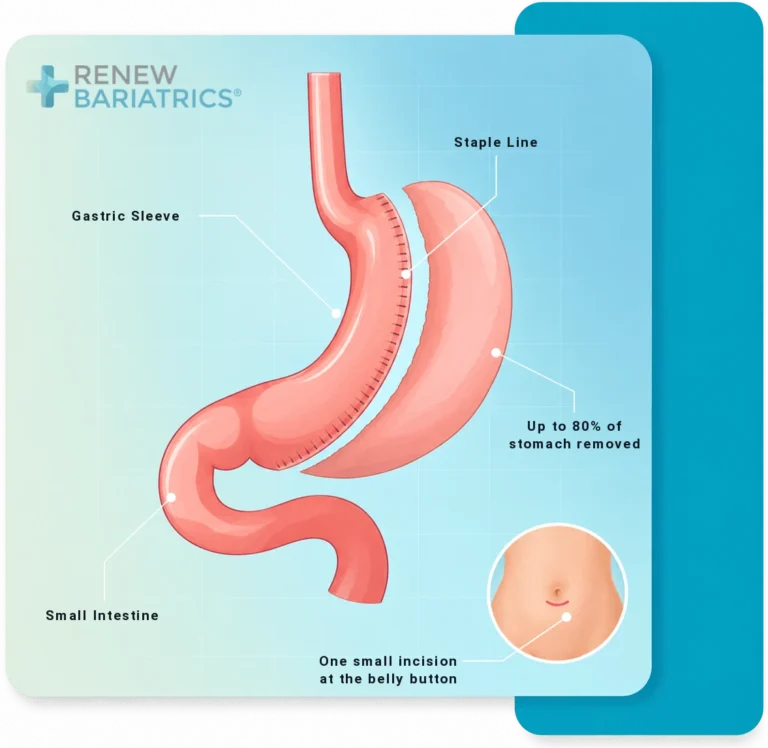 Single-incision gastric sleeve | 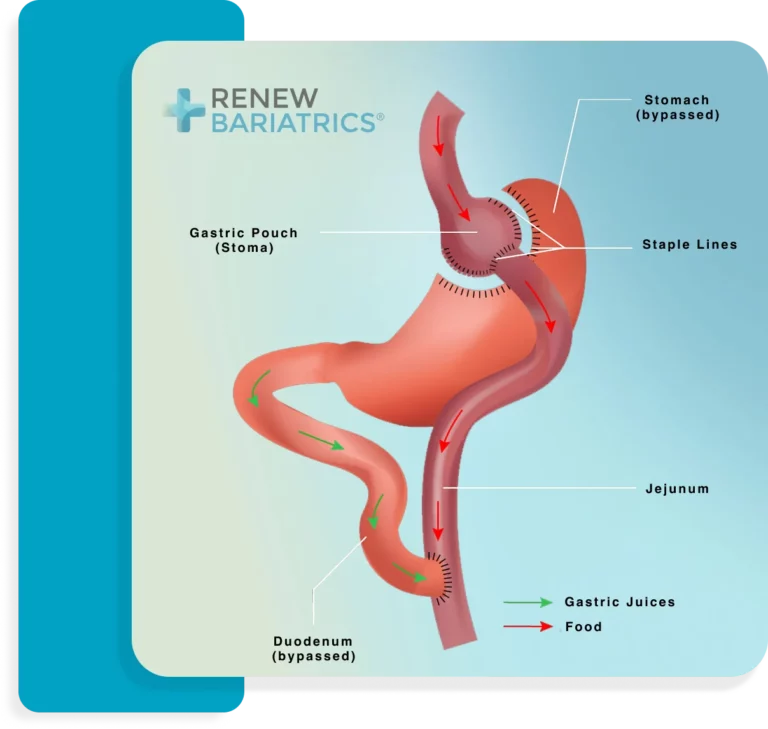 Roux-en-Y gastric bypass | 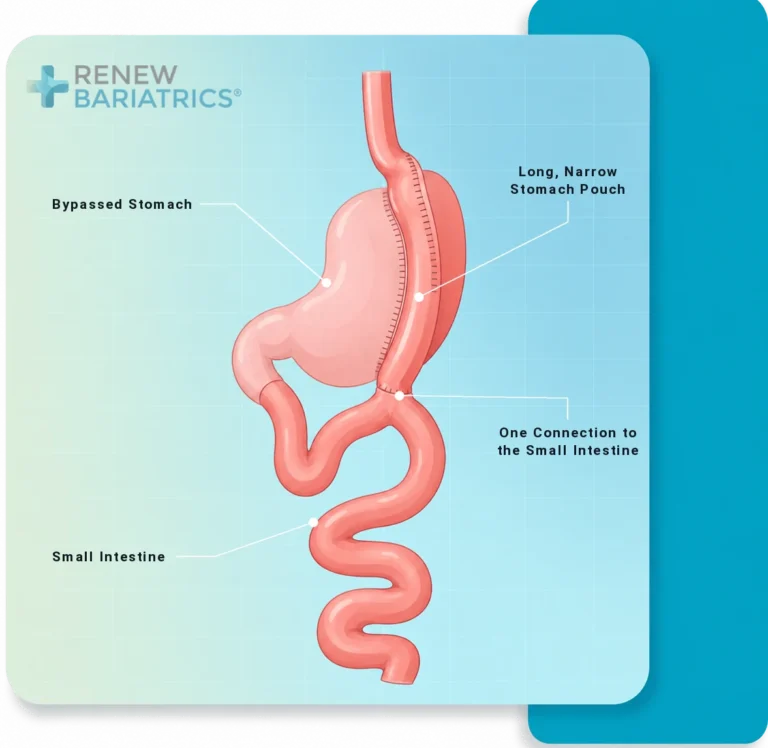 Mini gastric bypass | 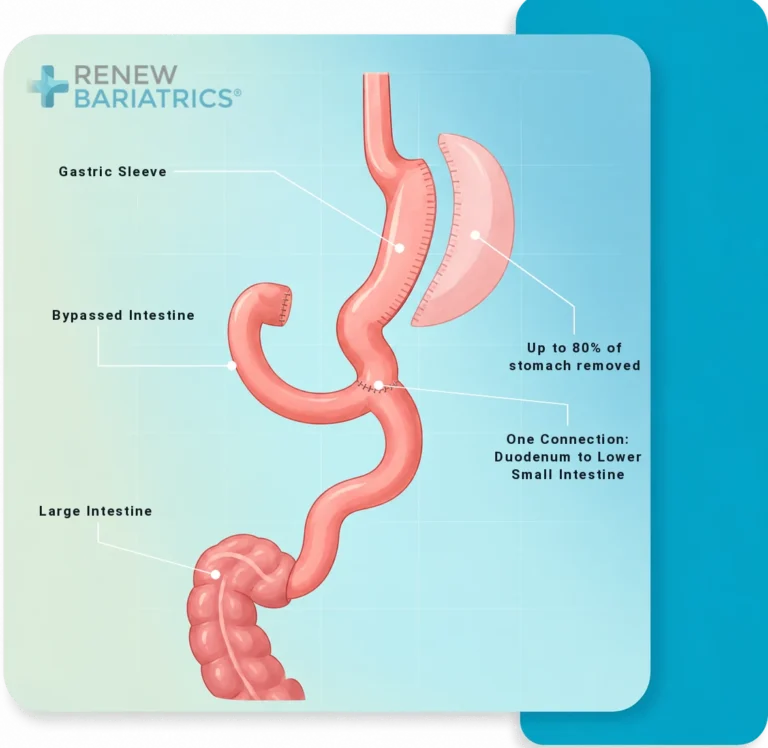 SADI-S |
|---|---|---|---|---|---|
| The procedure | |||||
| Type | Laparoscopic surgery through small incisions | Laparoscopic surgery through one small incision at the belly button | Laparoscopic surgery through small incisions | Laparoscopic surgery through small incisions | Laparoscopic surgery through small incisions |
| How it works | About 80% of the stomach is removed, leaving a narrow sleeve | The same sleeve, done through one small incision at or just above the belly button | A small pouch is connected to the small intestine, so food bypasses part of it | A long, narrow pouch is connected to a loop of small intestine, with one connection | A sleeve is made, and the duodenum is connected to the lower small intestine |
| How it causes weight loss | Restrictive. The smaller stomach holds less food, and hunger hormones change | Restrictive, like the standard sleeve | Restrictive and malabsorptive. A small pouch limits food, part of the intestine is bypassed, and gut hormones change | Restrictive and malabsorptive, with one connection to the small intestine | Restrictive and malabsorptive. A sleeve limits food, and food skips a long section of intestine |
| Operating time | 68 minutes (median)MBSAQIP | No significant difference from the standard sleevemeta-analysis | 113 minutes (median)MBSAQIP | About 35 minutes shorter than Roux-en-Y on averagemeta-analysis | 70 minutes on average in a matched studyASMBS |
| Stay at Renew | 2 hospital nights, 1 hotel night | 2 hospital nights, 1 hotel night | 2 hospital nights, 1 hotel night | 2 hospital nights, 1 hotel night | 2 hospital nights, 1 hotel night |
| Who it suits | |||||
| BMI range at Renew | 29.5 to 65 | 29.5 to 35 | 29.5 to 55 | 29.5 to 55 (up to 50 with Dr. Pérez) | 40 to 65 |
| Best fit for | A BMI in Renew’s range with little or no reflux, who want a simpler surgery with no intestinal rerouting | A BMI of 29.5 to 35, no significant reflux, and a preference for the smallest scar | People with reflux or type 2 diabetes, up to a BMI of 55 | People who want more weight loss than a sleeve, with no significant reflux. Up to a BMI of 55 (50 with Dr. Pérez) | A BMI of 40 to 65, or type 2 diabetes, for people who want the most weight loss |
| Not ideal for | People with significant reflux (GERD), which the sleeve can make worse | A higher BMI or past abdominal surgeries, where the standard approach may be better. Significant reflux | People who can’t avoid NSAID pain relievers or quit smoking, both of which raise ulcer risk | People with significant reflux | People with significant reflux, or who can’t commit to daily supplements and lab checks |
| Weight loss in studies | |||||
| At 1 year | 25–30%PCORnet Bariatric Study, Kollmann et al. | 25–30%Ataya et al., PCORnet Bariatric Study, Kollmann et al. | about 31%PCORnet Bariatric Study, Kollmann et al. | about 37%Karagul et al. | about 42%Sánchez-Pernaute et al. |
| At 2 years | 25–33%Mayo Clinic, Franken et al. | 25–33%Ataya et al., Mayo Clinic, Franken et al. | about 33%Franken et al. | 36–37%Franken et al., Karagul et al. | about 42%Sánchez-Pernaute et al. |
| At 5 years | 19–27%PCORnet Bariatric Study, Kollmann et al., Franken et al. | 19–27%Ataya et al., PCORnet Bariatric Study, Kollmann et al., Franken et al. | 26–29%PCORnet Bariatric Study, Kollmann et al., Franken et al. | about 33%Franken et al., Musella et al. | 34–39%Sanchez-Cordero et al., Sánchez-Pernaute et al. |
| Risks | |||||
| Common side effects | Nausea and fatigue while healing, reflux, constipation and hair thinning during fast weight loss | The same as the standard sleeve | Dumping syndrome (up to 40%), nausea, loose stools and low iron or B12dumping consensus | Reflux, including bile reflux, loose stools and low iron or vitamins | Looser, more frequent stools and gas, plus vitamin and protein deficiencies |
| Serious risks | Staple-line leak, bleeding, narrowing and blood clots. 1.0% needed another operation within 30 daysMBSAQIP | Leak in 1.28% vs 0.6% for the standard sleeve, not a significant difference. Incisional hernia rates were similarmeta-analysis | Leak at a connection, bleeding and bowel obstruction. 2.5% needed another operation within 30 days, vs 1.0% after the sleeveMBSAQIP | Leak, bleeding and marginal ulcer. 8% were converted to Roux-en-Y within 5 yearsYOMEGA trial | Leak, bleeding and bowel obstruction. Short-term complications of 5.4% to 11.6% across 4 studiesreview |
| Long-term risks | Reflux. 31% had reflux-related esophagitis at 10 years, vs 7% after bypassSLEEVEPASS | The same reflux risk as the standard sleeve | Marginal ulcers (0.9% at 1 year to 11.4% over 8 years) and internal hernia (2% when gaps are closed)ASMBS, meta-analysis | Reflux symptoms in 41% at 5 years, vs 18% after Roux-en-YYOMEGA | Low vitamins A, D and K, iron and protein. The sleeve part can worsen refluxASMBS |
| Vitamins and follow-up | Daily vitamins and follow-up for life | Daily vitamins and follow-up for life | Lifelong vitamins, including B12, iron and calcium, with regular lab checks | Lifelong vitamins and lab checks | Higher-dose supplements and lab checks for lifeASMBS |
| Pros and cons | |||||
| Pros |
|
|
|
|
|
| Cons |
|
|
|
|
|
| Cost | |||||
| Price at Renew | $4,899 | Custom quoteDr. Pérez | $6,299 | $6,299 | $6,899Dr. Pérez |
Scroll sideways to see every procedure.
| Compare | 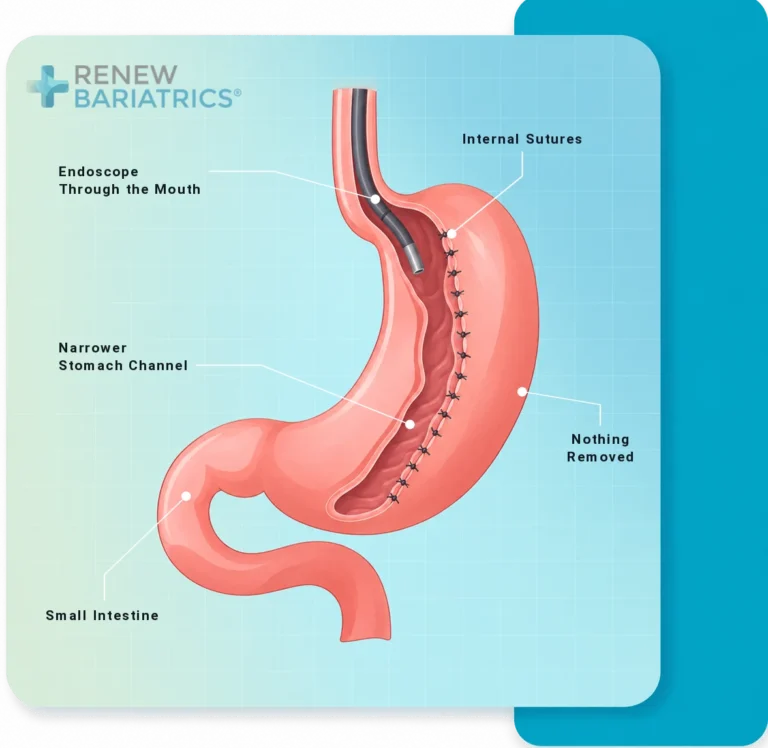 ESG | 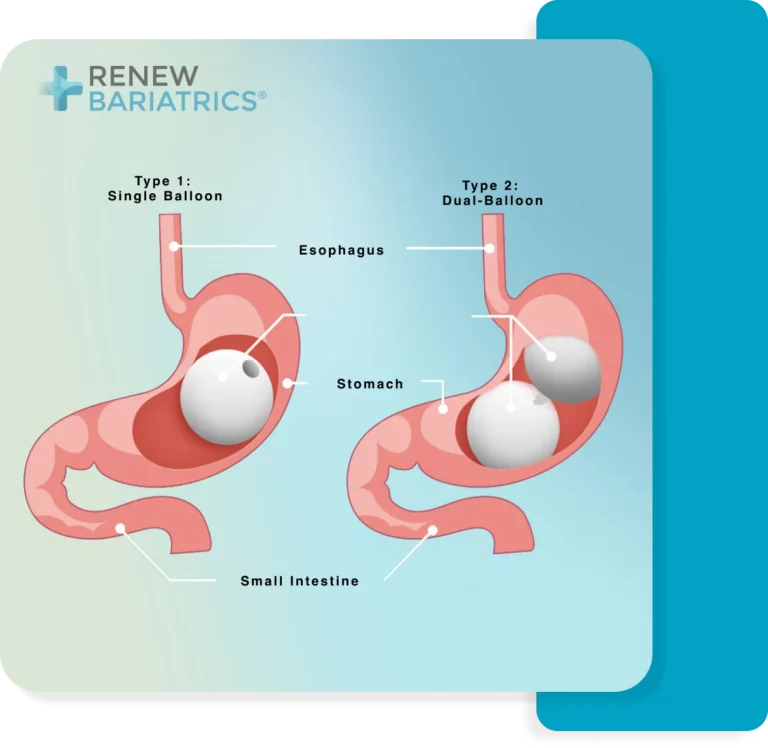 Gastric balloon |
|---|---|---|
| The procedure | ||
| Type | Endoscopic, through the mouth. No incisions | Endoscopic, through the mouth. No incisions |
| How it works | Stitches placed through the mouth make the stomach smaller. No part of it is removed | A balloon in the stomach helps you feel full on less food, and is removed after 6 to 12 months |
| How it causes weight loss | Restrictive. Stitches fold the stomach into a smaller tube. Nothing is removed | Space-occupying and temporary. The balloon fills part of the stomach so you feel full sooner |
| Operating time | 80 minutes on averagemeta-analysis, 3 studies | Less than 30 minutes, under sedation |
| Stay at Renew | 2 hospital nights, 1 hotel night | 1 hotel night |
| Who it suits | ||
| BMI range at Renew | 29.5 to 40 | 25.5 to 40 |
| Best fit for | A BMI of 29.5 to 40, for people who want to avoid surgery and incisions | A BMI of 25.5 to 40, for people who want a temporary, non-surgical start |
| Not ideal for | A BMI above 40, or people who need surgery-level weight loss | A BMI of 35 or more, where a sleeve may give greater weight loss. People who can’t make a second trip for removal |
| Weight loss in studies | ||
| At 1 year | about 16%Singh et al. | 10–11%Balloon vs ESG meta-analysis, StatPearls, FDA summary of the Spatz3 trial |
| At 2 years | 18–20%Mayo Clinic, Singh et al. | Not enough dataFDA summary of the Spatz3 trial |
| At 5 years | about 16%Sharaiha et al. | Not enough dataFDA summary of the Spatz3 trial |
| Risks | ||
| Common side effects | Pain, cramping and nausea for the first several days | Nausea (90%), vomiting (72%) and stomach pain (60%), mostly in the first daysSpatz3 FDA trial |
| Serious risks | 2% had a serious ESG-related adverse event, with no deathsMERIT trial | 3.7% had a device- or procedure-related serious adverse event. 16.6% had the balloon removed earlySpatz3 FDA trial |
| Long-term risks | Less long-term data than surgery. Stitches can loosen over time | Weight can return after removal without lasting habit changes |
| Vitamins and follow-up | Vitamins and follow-up as advised by your care team | Follow-up and diet coaching while the balloon is in |
| Pros and cons | ||
| Pros |
|
|
| Cons |
|
|
| Cost | ||
| Price at Renew | Custom quoteDr. Pérez | From $3,999Dr. Pérez |
Scroll sideways to see every procedure.
| Compare | 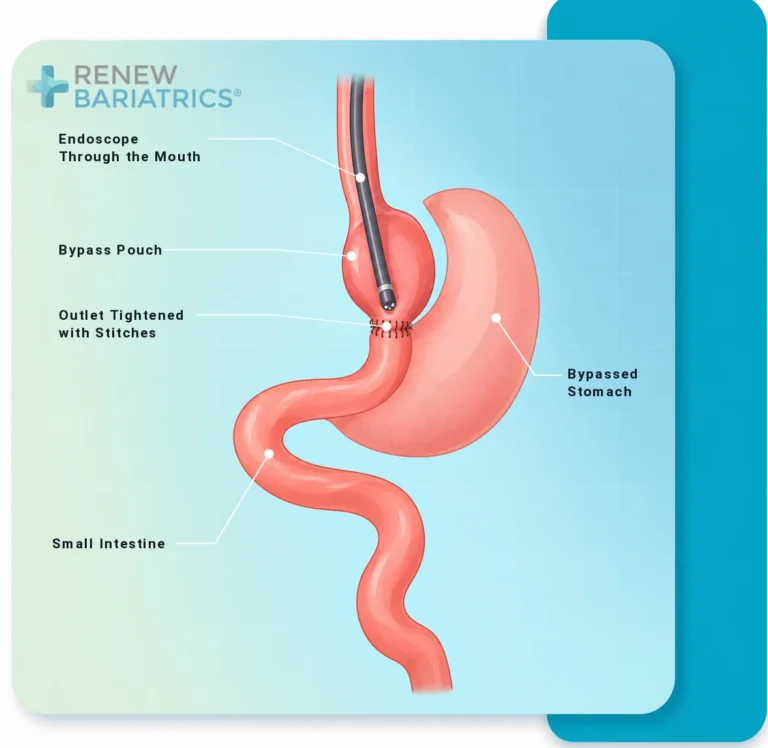 TORe | 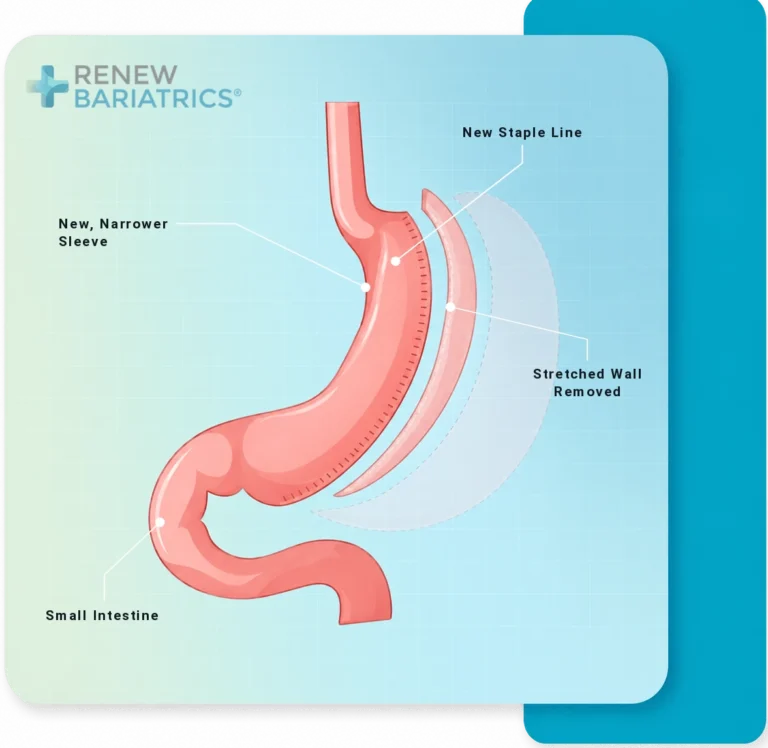 Re-sleeve | 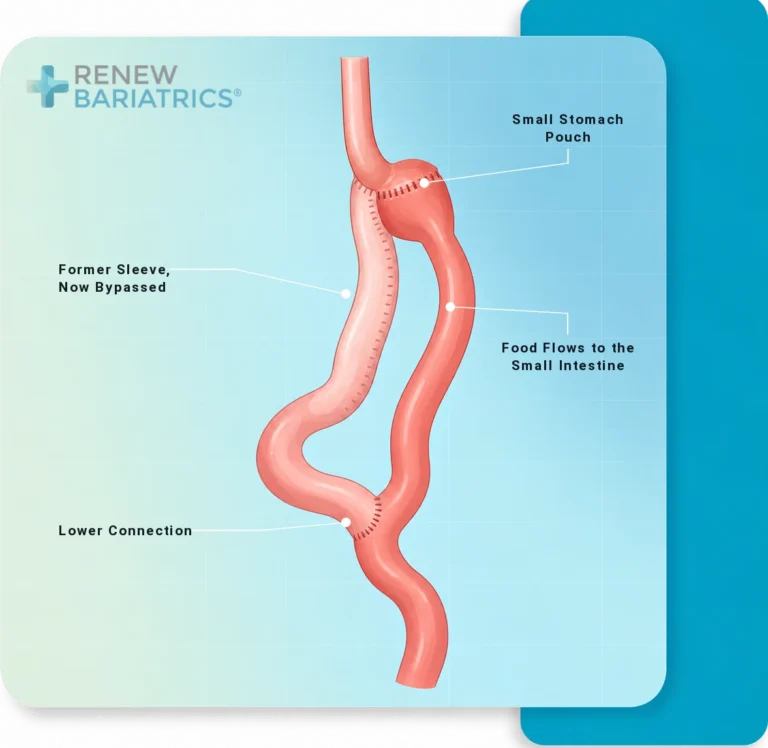 Sleeve to bypass | 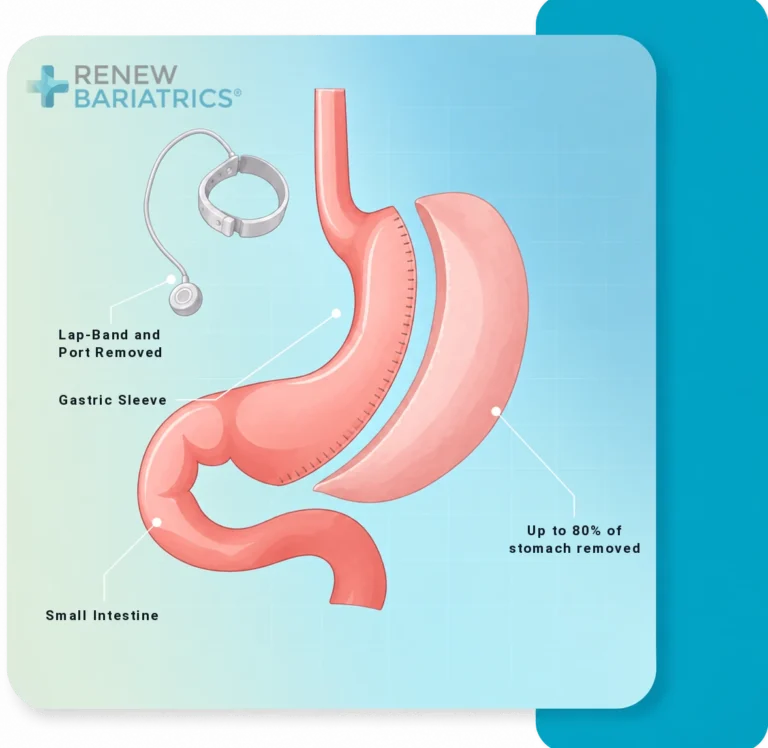 Lap-Band to sleeve |
|---|---|---|---|---|
| The procedure | ||||
| Type | Endoscopic, through the mouth. No incisions | Laparoscopic surgery through small incisions | Laparoscopic surgery through small incisions | Laparoscopic surgery through small incisions |
| How it works | A revisional surgery for gastric bypass patients. Stitches placed through the mouth tighten the stretched outlet of the pouch | A sleeve that has stretched is trimmed and stapled into a narrower sleeve | The sleeve is converted to a Roux-en-Y or mini gastric bypass | The Lap-Band is removed and the stomach is made into a sleeve, in one or two stages |
| How it causes weight loss | Restrictive. Tightening the outlet slows food leaving the pouch, so you feel full sooner | Restrictive. The stretched sleeve is made smaller again | Restrictive and malabsorptive, like a first bypass | Restrictive, like a first sleeve |
| Operating time | About 60 minutes | Longer than a first sleeve: 133 vs 106 minutesstudy | Longer than a first bypass: 145 vs 125 minutes on averagestudy | Longer than a first sleeve: 133 vs 106 minutes for revisional sleevesstudy |
| Stay at Renew | Same-day discharge or one monitored night, plus hotel nights | Confirmed in your quote | Confirmed in your quote | Confirmed in your quote |
| Who it suits | ||||
| BMI range at Renew | Not set yet. Dr. Pérez confirms if it suits you | 29.5 to 65 | 29.5 to 55 (up to 50 with Dr. Pérez) | 29.5 to 65 |
| Best fit for | Weight regain after a gastric bypass, when the pouch outlet has stretched | A sleeve that has stretched, with weight regain and no significant reflux | Reflux after a sleeve, or weight regain after a sleeve | Band problems such as slippage or pain, or weight regain, with no significant reflux |
| Not ideal for | Anyone who hasn’t had a gastric bypass | People with reflux after a sleeve, for whom conversion to bypass is usually considered | People who can’t commit to lifelong vitamins and follow-up | People with significant reflux, who may do better with a bypass |
| Weight loss in studies | ||||
| At 1 year | 8–17%Maselli et al., Jirapinyo et al., Jirapinyo et al., Ortega et al. | 17–24%El Khoury et al., Filip et al. | 20–27%Matar et al., Diaz Del Gobbo et al., Kermansaravi et al. | about 18%Nazari et al. |
| At 2 years | about 8%Ortega et al. | 21–24%El Khoury et al., Gerges et al. | 17–27%Diaz Del Gobbo et al., Kermansaravi et al. | about 19%Nazari et al. |
| At 5 years | about 9%Jirapinyo et al., Ortega et al. | 15–22%El Khoury et al., El Khoury et al., Filip et al. | 18–21%Diaz Del Gobbo et al., Kermansaravi et al. | 17–23%Nazari et al., Lap-Band to sleeve study of 600 patients |
| Risks | ||||
| Common side effects | Sore throat, nausea and upper belly discomfort in the first days | Similar to a first sleeve: nausea while healing, reflux and fatigue | The same as a first bypass: dumping, nausea, loose stools and low iron or B12 | Similar to a first sleeve: nausea while healing, reflux and fatigue |
| Serious risks | Serious adverse events in 0.3% to 1.5% across meta-analysesOrtega, ABE | Leak in 2.0% and complications in 7.6% across 10 studiesmeta-analysis | Complications in 16.4% within 30 days and 11.4% after 30 daysmeta-analysis | Serious complications in 3.3% within 30 days. Leak in 2.5% vs 0.9% for a first sleeve, and higher with an eroded band12,085 US patients, 600 patients |
| Long-term risks | The outlet can stretch again, and weight loss fades over time | Reflux can continue or get worse. The sleeve can stretch again | Ulcers, internal hernia and nutrient deficiencies, as with any bypass | More reoperations than a first sleeve: 7.3% vs 3.2%study |
| Vitamins and follow-up | Continue your bypass vitamins and follow-up | Daily vitamins and follow-up for life | Lifelong vitamins and lab checks | Daily vitamins and follow-up for life |
| Pros and cons | ||||
| Pros |
|
|
|
|
| Cons |
|
|
|
|
| Cost | ||||
| Price at Renew | $8,599Dr. Pérez | Custom quote | Custom quote | Custom quote |
Studies measure weight loss over different periods and in different groups of patients, so compare figures with care. Side effects are general descriptions, and your surgeon will go over the risks that apply to you. Prices are all-inclusive except airfare. See what’s included.
How they work
Which fits you?
The gastric sleeve is the most performed weight loss surgery in the US (ASMBS estimate, 2023).
Gastric bypass is often preferred. In SLEEVEPASS, 64% of sleeve patients took reflux medication at 10 years, vs 36% after bypass (SLEEVEPASS).
The ASMBS describes SADI-S as highly effective for long-term weight loss and type 2 diabetes remission (ASMBS).
Renew offers ESG for a BMI of 29.5 to 40, and the gastric balloon for a BMI of 25.5 to 40.
The single-incision sleeve is done through one incision at the belly button, with results similar to the standard sleeve (2023 meta-analysis).
See bariatric revision surgery for options after a sleeve, bypass or Lap-Band. After a bypass, TORe, an endoscopic revisional surgery, tightens a stretched outlet with no incisions.
Our GLP-1 program offers oral and injectable medication with telehealth visits.
The 2022 ASMBS and IFSO guidelines recommend weight loss surgery for a BMI of 35 or more, and say it should be considered for a BMI of 30 to 34.9 with a metabolic condition such as type 2 diabetes. BMI is only one factor. Our surgeons also look at reflux, past surgeries and your health history.
Side by side
Getting started
Send your health history, and our surgeons will review it and recommend an option. Virtual consultations are available.
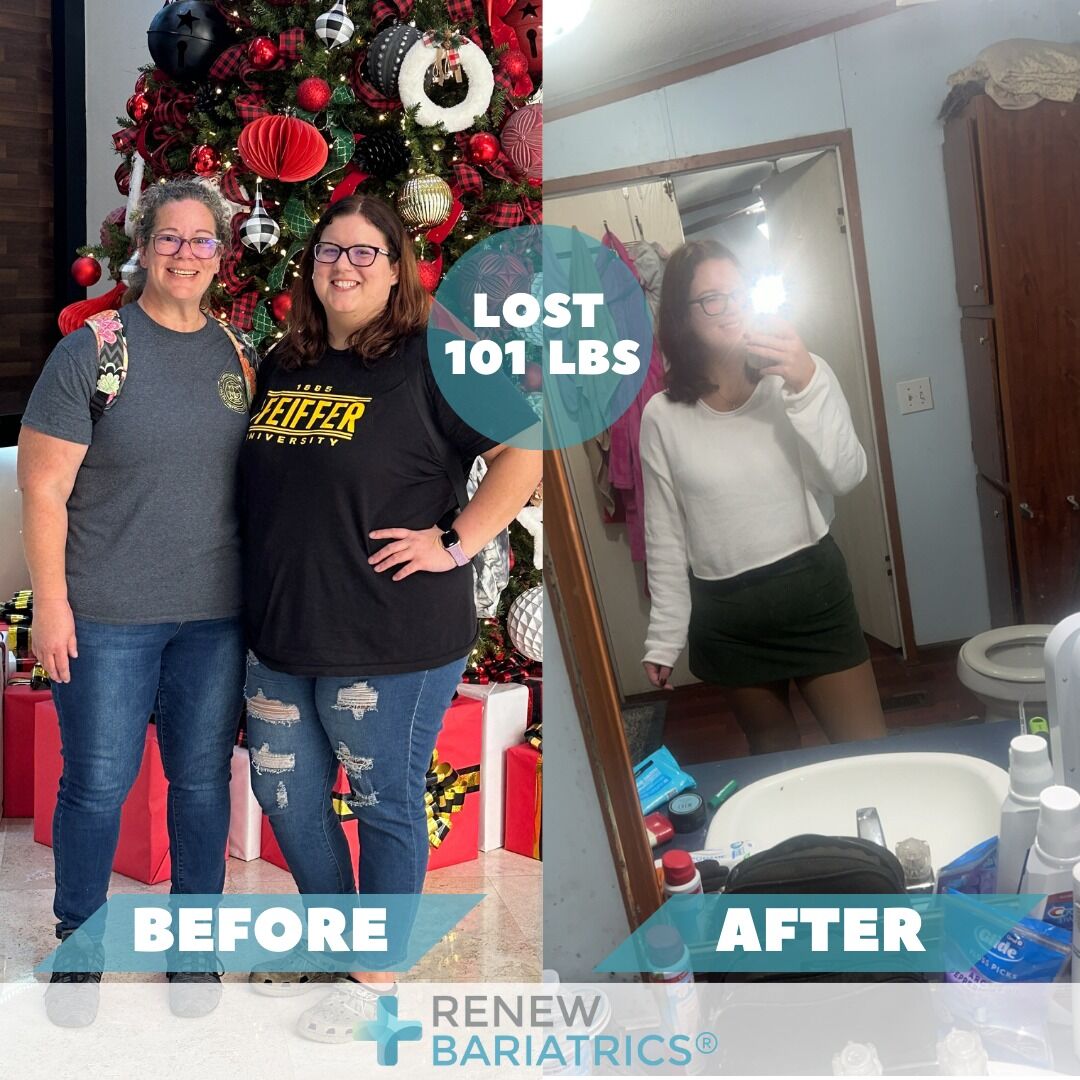
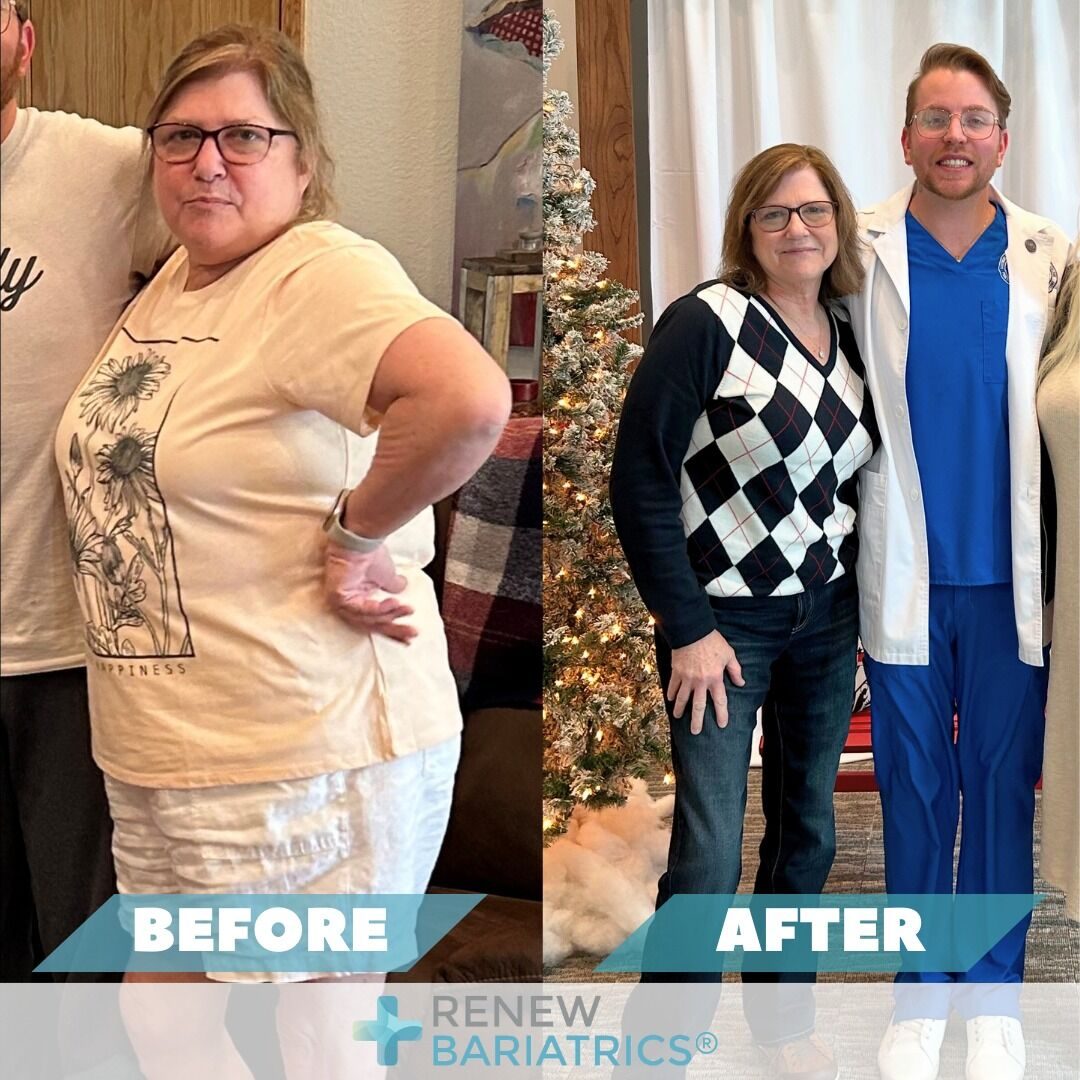
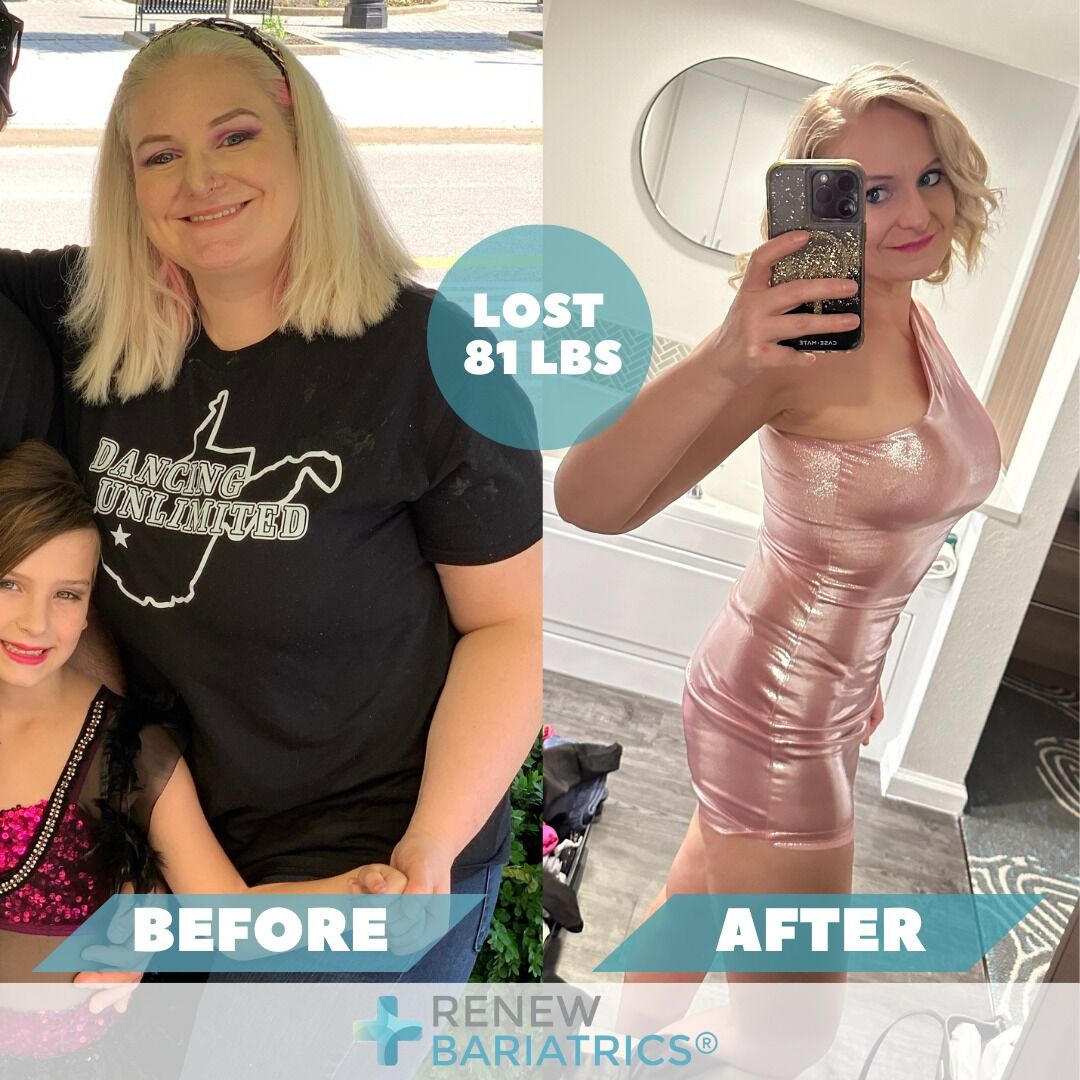
All four patients had a gastric sleeve at Renew. Results vary.
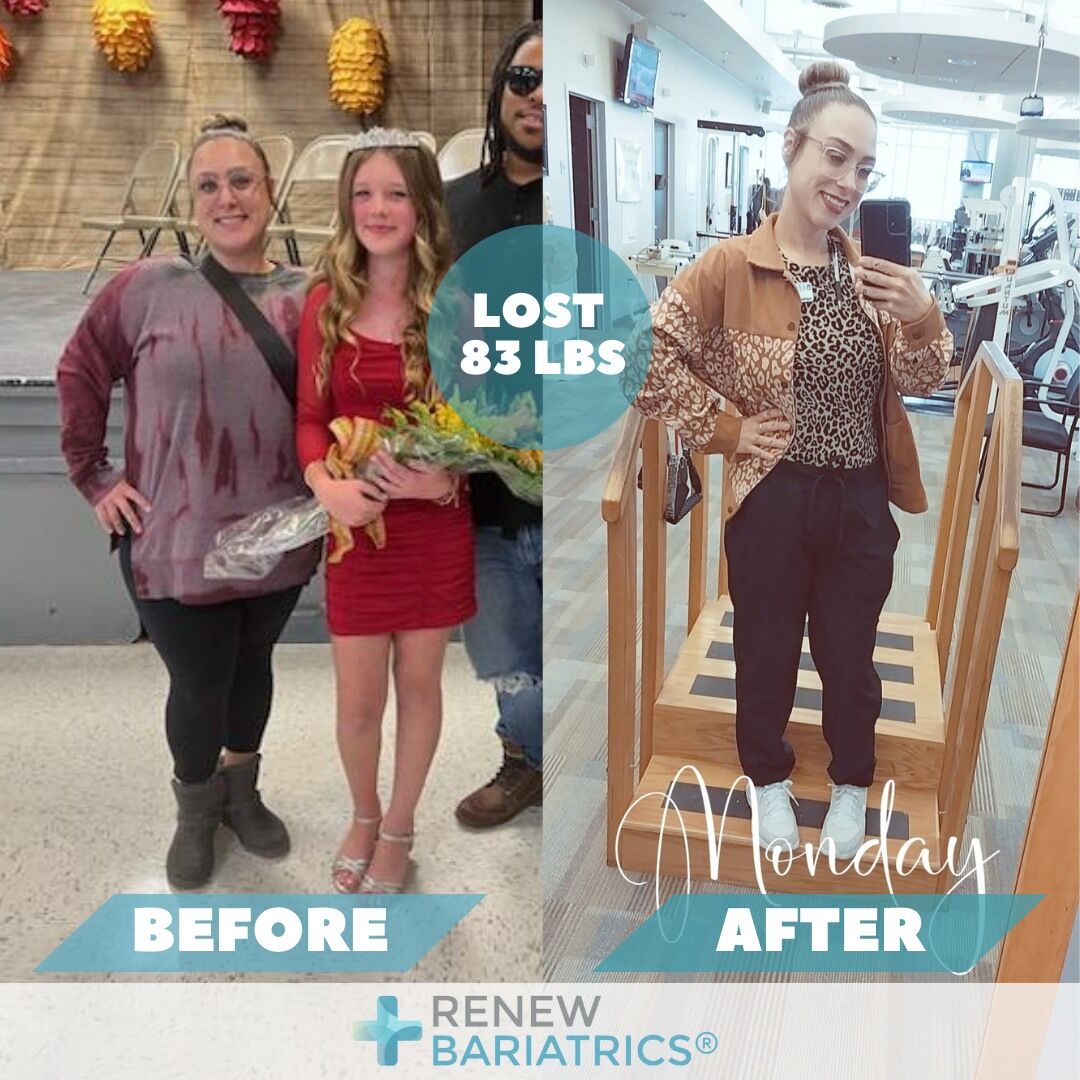
“I'm a physical therapy tech now I would have never been able to physically dp the job before it's been an amazing year.”
“My weight has slowed down, maintaining in the 170s for the past few months, but I’m not giving up hope of reaching my goal!”
“The best thing is I accomplished my goal of getting off insulin and I’m off all 3 blood pressure meds I was taking!! I will be forever grateful to Dr Perez and the Renew team!”
“I am very satisfied with my weight loss journey!”
5-star Google reviews from gastric sleeve patients. Want to talk with a past patient? Ask your coordinator.
“Staff is very friendly and very helpful. Dr. Green was so good and explained everything that was gonna happen. I had the gastric sleeve in Tijuana and couldn’t have been more satisfied with the whole experience.”
“I had the gastric sleeve done in Tijuana and it was great! Everything was very well explained, planned, and professional. I can not say one negative thing about my experience or the people I encountered.”
“I received gastric sleeve surgery in Tijuana. Dr.Armenta was my doctor. The staff and faculty are great and very friendly and made the process smooth and relaxing.”
from 850+ reviews across 4 platforms
Ratings and review counts as listed on each platform. Select a platform to read reviews there.
There isn’t one best procedure for everyone. The right choice depends on your BMI, reflux, type 2 diabetes, past surgeries and goals. Our surgeons review your health history and recommend an option.
In studies, SADI-S and gastric bypass lead to more weight loss than the gastric sleeve. Endoscopic options such as ESG and the gastric balloon lead to less weight loss than surgery.
Gastric bypass is often preferred if you have reflux. In the SLEEVEPASS trial, 64% of sleeve patients were taking reflux medication 10 years after surgery, vs 36% after bypass.
The gastric balloon and ESG are done through the mouth with no incisions. TORe is too. It’s a revisional surgery for people who’ve had a gastric bypass. Our GLP-1 program is a medication option with no procedure.
The gastric sleeve is $4,899, gastric bypass and mini gastric bypass are $6,299, SADI-S is $6,899, TORe is $8,599 and the gastric balloon starts at $3,999. The single-incision sleeve, ESG, re-sleeve, sleeve to bypass and Lap-Band to sleeve are custom quotes. Prices are all-inclusive except airfare.
Renew does not place new Lap-Bands. If you already have one, we offer Lap-Band removal and revision.
Often, yes. A gastric sleeve can be re-sleeved or converted to gastric bypass, mini gastric bypass or SADI-S, and a Lap-Band can be converted to a sleeve. See our revision surgery page for options.
Yes. Renew accepts HSA and FSA funds and offers financing.
Free surgeon review
Tell us about your weight, health history and goals. Our team will follow up with the procedures that fit you. No commitment.
Double board-certified surgeons with 9,000+ surgeries.
Prefer to talk? Call 24/7 (844) 736-3963
Free, no-obligation review
Prefer to talk? Call (844) 736-3963, available 24/7.
No commitment. A coordinator will contact you.